Why Did a Data Center Developer Make an Offer on Your Farm?
If you've received an unexpected offer for your land, the number probably looks nothing like what your farm would bring at auction. Here's what the developer is likely looking at, and what you should understand before you sign anything.
It often starts with a letter, a phone call from a land agent, or a neighbor mentioning that "someone's been asking around." The offer that follows may be several times what any agricultural appraisal would support. For many families, that raises an obvious question: why my farm?
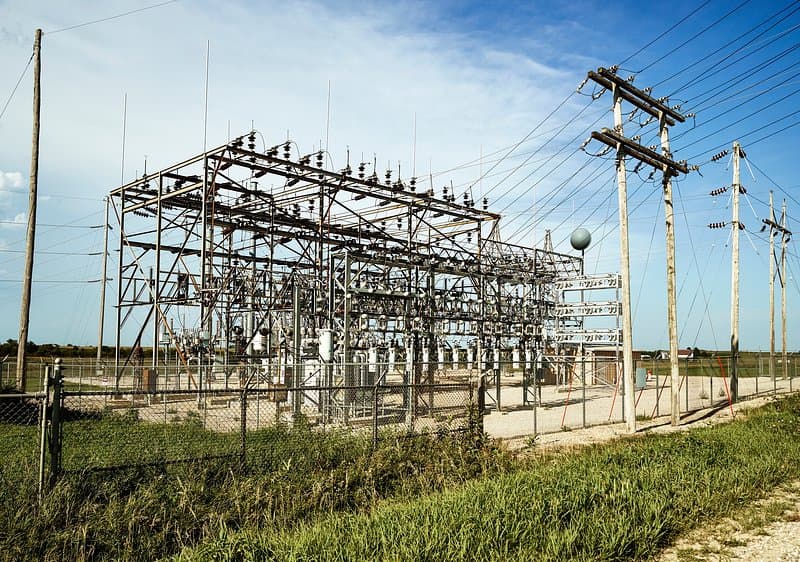
The short answer is that the developer isn't interested in your soil, your yields, or your buildings. They're interested in where your land sits relative to things you may drive past every day without thinking about: high-voltage power lines, substations, fiber optic routes, highways, and the edge of a growing metro area. In many parts of the country, farmland is simply where those things come together on a large, flat, buildable piece of ground.
Understanding that changes how you should read the offer.
Power, power, power
Data centers use enormous amounts of electricity around the clock. Lawrence Berkeley National Laboratory estimates that U.S. data centers could consume roughly 12% of all U.S. electricity by 2030 in its reference case. A single large campus can draw as much power as a small city.
That means the hardest thing for a developer to find isn't land. It's a location where the utility can realistically deliver a very large amount of power within a reasonable number of years. Land near strong grid infrastructure is scarce, and if your farm is close to a major transmission line or substation, you may be sitting on something the developer can't easily find elsewhere.
It's important to note that being near a power line is not the same as having power available. The line may be the wrong voltage, the nearby substation may already be full, or serving a new large load might require years of grid upgrades. Developers often don't know yet whether your site will work. That uncertainty is a big reason offers are structured the way they are.
Why your farm might fit what they're looking for
Beyond power, farmland tends to offer a combination that's hard to assemble anywhere else.
Size under one owner. A data center campus needs far more than the buildings. It needs room for substations, backup generators, cooling equipment, stormwater ponds, security setbacks, roads, and future phases. Assembling that space in the city could mean dealing with dozens of owners. Your farm may be one or two large parcels with a clean title history.
Flat, open ground. The same qualities that make land good for farming with modern equipment make it cheaper to build on: gentle slopes, open access, and few existing structures.
Location near the metro edge. Many data center uses need to stay reasonably close to cities, customers, airports, contractors, and fiber networks.
Infrastructure already crossing the area. Transmission lines, fiber routes along highways and railroads, and gas or water lines serving nearby industry can all make your parcel more attractive. If your property has multiple of these, it will be more valuable to developers.
Why the offer might be so high
It's natural to be suspicious of a number that seems too good. But from the developer's side, the math can make sense.
Land is usually a small share of the total cost of a data center project. The buildings, electrical equipment, and computing hardware cost far more. If your land gives them a realistic path to power, paying a premium for it can be a reasonable business decision.
Also, land value in this business rises in steps as risk is removed. Raw farmland, land under option, land that's been rezoned for industrial use, and land with a utility-backed plan for power service are very different assets. Each step removes a way the project could fail. Developers are often willing to pay a premium for the chance to take those steps on your property, because if they succeed, the site becomes much more valuable.
What an offer does and doesn't mean
An offer from a developer means your land passed an early screen. It doesn't mean a data center is coming.
Many early agreements are options, not sales. The developer pays you for the exclusive right to study the property and, if things work out, buy it later. During that time they may be talking with the utility, studying soils and wetlands, checking fiber routes, and working toward zoning approval. Any one of those can end the project. You may also be one of several landowners in the area being approached, since developers often control more land than they'll ultimately need, or keep backup sites in case their first choice fails.
That's not necessarily bad for you. Option payments mean income even if the deal never closes. But it's important to plan as though the sale might not happen, and to make sure you have a plan if it doesn't.
Questions to ask before signing a data center land contract
A high per-acre price can hide years of uncertainty or terms that don't work for your operation. The questions below are ones a developer should be able to answer before you sign, because each answer belongs in the option agreement or purchase contract. Get them in writing.
- Is this an option agreement or a direct purchase offer? Most early data center land deals are options, meaning the developer pays for the right to buy later. An option does not commit them to a sale.
- How long is the option period, and how many times can it be extended? This tells you the longest your farmland could be tied up before you know whether it will sell.
- How much is each option payment, when is it paid, and is any of it refundable? If the project stalls, option payments may be the only money you receive, so they should be clearly scheduled and nonrefundable.
- Can you show me a map of the exact acres you want to buy? A marked boundary shows whether you can keep any of the land, and which parts of your operation the sale would affect.
- Can I keep farming or leasing the land during the option period? Protect your crop or rental income while they study the site.
- What access do you need for surveys and testing, and who pays for crop damage, drainage tile repair, and restoration? The contract should spell out access terms and require the developer to cover any damage.
- What are the confidentiality and exclusivity terms? Confirm you can share the offer with your attorney, tax adviser, lender, and family, and understand whether you're barred from talking with other buyers.
These deals are more complex than a typical farm sale, so work with an attorney experienced in land and energy transactions and an independent tax adviser. If a developer won't put clear answers in writing, treat that as useful information about the deal.
How Ortelius can help
Most landowners approached by a developer are negotiating with someone who has already studied their land in detail. We help close that gap.
Ortelius analyzes land at the parcel level, looking at the same things developers look at: proximity to transmission and substations, fiber access, buildable acreage, flood and wetland constraints, soils, zoning, and road access. That gives you an independent picture of why your land drew interest, how it may compare with nearby alternatives, and what could make or break a project there. That context can help you and your advisers negotiate from a stronger position, set realistic expectations, and decide whether this is the right move for your family and your land.
With your consent, we also help your site reach more developers who may be interested in your land. With more eyes on your property, you have a higher chance of attracting better deals.
Bottom line: Not every farm should become a data center, and not every offer will turn into a sale. But you should understand what you're being offered before you decide.